Managing time effectively is one of the most valuable skills a student can develop. Students often have to handle several responsibilities at the same time, including attending classes, completing assignments, preparing for exams, working part-time, helping with family responsibilities, and maintaining friendships and hobbies. Without a clear plan, these responsibilities can quickly become overwhelming.
Time management does not mean studying all day or filling every minute with work. Instead, it means deciding what deserves your attention, creating realistic schedules, avoiding unnecessary distractions, and making enough room for rest and personal activities. A balanced routine can help students become more productive while also enjoying their academic and personal lives.
For students who work while studying, good planning becomes even more important. A busy schedule requires realistic expectations rather than simply adding more tasks to an already full day. Educational guidance commonly recommends identifying fixed commitments first, planning study blocks around them, prioritizing important tasks, and protecting time for rest and personal activities.
Why Time Management Is Important for Students
Students have a limited amount of time each day, but their responsibilities can seem unlimited. Poor time management can lead to missed deadlines, rushed assignments, late-night studying, stress, and a lack of personal time.
Effective time management can help students:
- Complete assignments before deadlines
- Prepare for exams gradually
- Reduce procrastination
- Balance work and education
- Make time for family and friends
- Maintain hobbies and exercise
- Get enough rest
- Reduce unnecessary stress
- Improve concentration and productivity
- Develop valuable skills for future careers
The goal is not to make every day extremely busy. The goal is to use available time intentionally.
Understand Where Your Time Goes
Before creating a new schedule, spend a few days observing how you currently use your time.
Write down approximately how much time you spend on:
- Classes
- Commuting
- Studying
- Assignments
- Work
- Meals
- Household responsibilities
- Social media
- Entertainment
- Exercise
- Sleep
- Family and friends
- Personal activities
This exercise can reveal time that disappears without producing meaningful results.
For example, a student may believe that social media takes only 30 minutes per day. After checking actual usage, they may discover that several short sessions throughout the day add up to two or three hours.
Once you know where your time goes, it becomes easier to decide what should change.
Create a Weekly Schedule
A weekly schedule is usually more useful than planning every day from scratch. Start by writing down activities that cannot easily be changed.
These may include:
- Class times
- Work shifts
- Transportation
- Family responsibilities
- Regular appointments
- Sports or other important commitments
After adding these fixed activities, identify the remaining time available for studying, assignments, exercise, relaxation, and social activities.
A weekly overview allows students to see busy periods before they arrive. For example, if three assignments are due during the same week, you can begin working on them earlier instead of waiting until the deadlines are close.
Universities commonly recommend mapping academic commitments, paid work, household responsibilities, hobbies, exercise, sleep, and social activities onto a weekly planner so students can see whether their schedule is realistic.
Set Clear Academic Goals
A schedule is more effective when it is connected to specific goals.
Instead of writing:
“Study biology.”
Create a more specific goal:
“Review Chapter 4 and answer 20 practice questions.”
Instead of:
“Work on assignment.”
Write:
“Complete the introduction and first section of the assignment.”
Specific goals make it easier to begin and finish tasks.
Try setting goals at three levels:
Daily Goals
Choose two or three important academic tasks for each day.
Weekly Goals
Decide what you want to complete by the end of the week.
Monthly Goals
Consider larger objectives such as completing a project, preparing for an examination, improving a particular subject, or finishing a course module.
Clear goals reduce uncertainty and make study sessions more productive.
Prioritize Tasks by Importance
Not every task deserves equal attention.
A useful approach is to divide tasks into four categories:
Urgent and Important
These tasks require immediate attention.
Examples include:
- An assignment due tomorrow
- An upcoming examination
- A work responsibility that cannot be postponed
Important but Not Urgent
These tasks should be scheduled in advance.
Examples include:
- Long-term exam preparation
- Reading
- Research projects
- Skill development
These tasks are particularly important because delaying them can eventually turn them into emergencies.
Urgent but Less Important
These may need attention but should not consume your entire day.
Examples could include certain messages, minor administrative tasks, or requests from others.
Neither Urgent nor Important
These activities can often be reduced or moved to free time.
Examples include excessive social media browsing or unnecessary entertainment.
Prioritization helps students focus on what actually matters instead of simply completing the easiest tasks first.
Use Time Blocking
Time blocking means assigning specific periods of the day to particular activities.
For example:
7:00–8:00 AM: Morning routine and breakfast
8:00–12:00 PM: Classes
12:00–1:00 PM: Lunch and rest
1:00–3:00 PM: Work
3:30–5:00 PM: Study session
5:00–6:00 PM: Exercise or relaxation
6:00–8:00 PM: Work or assignments
8:00–9:00 PM: Dinner and family time
9:00–10:00 PM: Light revision
10:00 PM onward: Relaxation and preparation for sleep
The exact schedule will be different for every student. The important principle is to decide in advance when important activities will happen.
Time blocking can also prevent students from saying, “I will study whenever I have time.” Without a specific study period, free time can easily disappear.
Balance Study and Work
Working while studying can provide valuable experience and financial support, but it can also make time management more challenging.
Students who work should avoid creating schedules that leave no recovery time.
If possible, consider:
- Choosing work hours that do not conflict with important classes
- Studying during your strongest concentration periods
- Using smaller study blocks on busy days
- Preparing assignments before work-heavy periods
- Reducing unnecessary commitments during examination weeks
- Communicating your academic schedule with your employer when appropriate
If your job offers flexible scheduling, you may be able to arrange shifts around your most productive study periods. For working students, protecting sleep is also important because sacrificing sleep repeatedly can negatively affect performance at both work and school.
Use Small Study Sessions Effectively
Students sometimes believe they need three or four uninterrupted hours before studying is worthwhile. That is not always true.
If your schedule is busy, smaller study sessions can be useful.
For example:
- 20 minutes reviewing notes after class
- 30 minutes answering practice questions
- 15 minutes reviewing vocabulary
- 45 minutes writing part of an assignment
- 20 minutes preparing tomorrow’s study materials
Several short sessions can add up to meaningful progress.
This approach is especially useful for students who work, commute, or have family responsibilities.
Try the Pomodoro Technique
The Pomodoro Technique is a simple method for managing focused work.
A traditional version involves:
- Choose one task.
- Work for 25 minutes.
- Take a 5-minute break.
- Repeat the cycle.
- Take a longer break after several cycles.
The technique can be modified according to your concentration level. Some students may prefer 40–50 minute study periods followed by longer breaks.
The most important principle is to focus on one task instead of constantly switching between different activities. The University of Pittsburgh recommends the Pomodoro approach as one option for students who need structured study periods.
Avoid Multitasking While Studying
Multitasking can make studying less efficient.
For example, trying to:
- Watch lectures
- Answer messages
- Browse social media
- Listen to unrelated videos
- Complete assignments
at the same time can divide your attention.
Instead, choose one main activity.
During a study session, put your phone away or silence unnecessary notifications. Keep only the materials needed for the current task nearby.
A dedicated study environment can also help create a mental association between that location and focused work.
Control Your Phone and Social Media
Smartphones can be useful for calendars, educational applications, communication, and research. However, they can also become one of the biggest distractions during study time.
Try these strategies:
- Turn off nonessential notifications
- Keep your phone away during focused study
- Use website or app limits when necessary
- Avoid checking social media during every break
- Log out of distracting accounts on your study device
- Keep entertainment apps away from your main study screen
You do not need to eliminate social media completely. The goal is to control when you use it instead of allowing it to control your schedule.
Learn to Say No
One of the most difficult parts of time management is refusing activities that interfere with important priorities.
Students may receive invitations to:
- Parties
- Outings
- Gaming sessions
- Social events
- Unplanned trips
- Group activities
Social activities are important, but they need boundaries.
If you have an examination tomorrow, spending several hours at an unnecessary event may create problems. On the other hand, refusing every social activity can also create an unhealthy routine.
The better approach is to make decisions based on your priorities and deadlines.
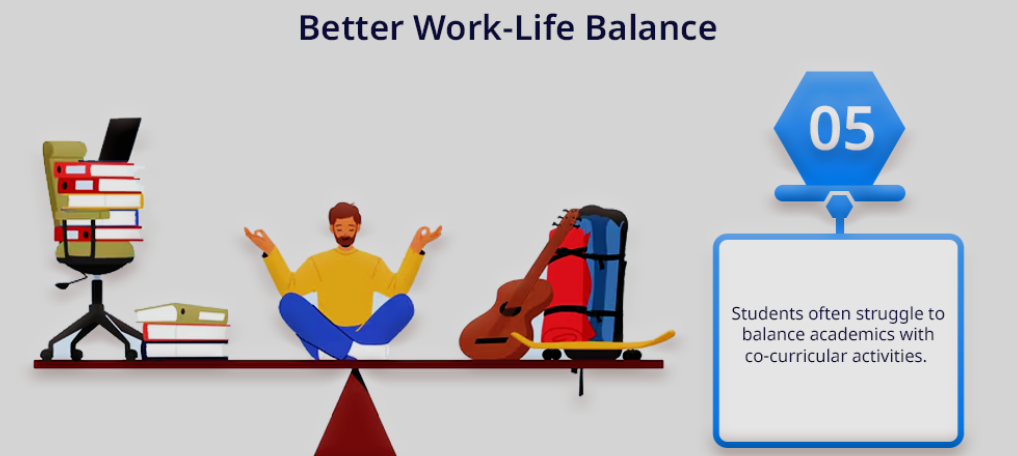
Schedule Free Time
Free time should not be treated as wasted time.
Students need opportunities to relax, spend time with friends and family, enjoy hobbies, exercise, and simply take a break from academic responsibilities.
A schedule that contains only study and work can become difficult to maintain. Student time-management guidance also emphasizes protecting time for life outside academics, including hobbies, exercise, friends, and relaxation.
Schedule free time just as you schedule study time.
For example:
- Friday evening for friends
- Saturday afternoon for hobbies
- 30 minutes daily for walking
- An hour in the evening for entertainment
When relaxation is planned, students can enjoy it without constantly feeling guilty about not studying.
Protect Your Sleep
Sleep should be considered part of your productivity system rather than an obstacle to productivity.
Staying awake late every night to study may seem productive, but regularly sacrificing sleep can make it harder to concentrate and maintain a consistent routine.
Instead of automatically extending study time late into the night, look for ways to improve the quality of your study sessions.
You can:
- Prepare tomorrow’s tasks before going to bed
- Avoid unnecessary late-night screen use
- Keep a reasonably consistent sleep schedule
- Complete demanding tasks earlier when possible
- Avoid turning every deadline into an overnight session
A sustainable routine is more valuable than occasional extreme study sessions.
Make Use of Your Most Productive Hours
Every student has different energy patterns.
Some students concentrate best in the morning. Others work better in the afternoon or evening.
Identify when you feel most alert and schedule demanding work during those periods.
For example, if you are highly focused between 8 AM and 11 AM, use that period for:
- Difficult subjects
- Essay writing
- Mathematics
- Problem-solving
- Exam preparation
Use lower-energy periods for:
- Organizing notes
- Reviewing flashcards
- Checking your calendar
- Reading easier material
- Administrative tasks
Matching tasks to energy levels can make your schedule more realistic and efficient.
Use Commute Time Wisely
Students who travel to school, college, university, or work may spend significant amounts of time commuting.
Depending on the situation, commuting time can sometimes be used for light academic activities.
You might:
- Listen to educational audio
- Review flashcards
- Read short notes
- Plan your day
- Review vocabulary
- Organize your task list
However, do not force yourself to study during every commute. Sometimes using travel time to relax is exactly what you need.
Start Assignments Early
Procrastination is one of the biggest enemies of good time management.
A large assignment can feel overwhelming when viewed as one enormous task.
Break it into smaller steps:
- Understand the requirements.
- Choose a topic if necessary.
- Gather materials.
- Create an outline.
- Write the first section.
- Complete the main content.
- Edit the work.
- Check formatting.
- Submit before the deadline.
Starting early gives you room to deal with unexpected problems.
A useful rule is to begin important assignments several days before they are due, even if you only spend a short amount of time getting started.
Create a Study Environment
Your environment can strongly influence your ability to focus.
Choose a study location that is:
- Comfortable
- Well organized
- Properly lit
- Relatively quiet
- Free from unnecessary distractions
If studying at home is difficult because of noise or interruptions, consider a library, study room, or another suitable location.
Tell family members or roommates when you need uninterrupted study time.
Creating boundaries can make focused study sessions easier.
Keep One Central Calendar
Students often lose track of deadlines because information is spread across multiple places.
You may have:
- Assignment dates in one notebook
- Work shifts in your phone
- Exam dates in a classroom announcement
- Personal appointments in another app
Try to maintain one primary calendar.
You can use a paper planner, smartphone calendar, computer application, or another system that you will actually use consistently.
Add:
- Exams
- Assignments
- Work shifts
- Class schedules
- Appointments
- Important personal events
A calendar gives you a visual picture of upcoming responsibilities.
Plan for Difficult Weeks
Not every week will be normal.
Some weeks may include:
- Multiple examinations
- Several assignments
- Extra work shifts
- Family responsibilities
- Important personal events
During these periods, temporarily reduce low-priority activities.
For example, you might spend less time on entertainment or social media while increasing study time.
However, do not remove sleep and basic recovery completely. The goal is to adjust your priorities, not create an unsustainable routine.
Review Your Schedule Every Week
Time management is not a system that you create once and never change.
At the end of each week, ask yourself:
- What did I accomplish?
- Which tasks were delayed?
- Why were they delayed?
- When was I most productive?
- What distracted me?
- Did I get enough rest?
- Did I spend enough time with family and friends?
- Did work interfere with important study periods?
- What should I change next week?
A weekly review can help you gradually improve your schedule.
If a timetable repeatedly fails, the solution may not be more discipline. The timetable itself may be unrealistic.
Example Weekly Routine for a Working Student
Here is a simple example that can be adapted to individual circumstances.
Monday to Thursday
Morning: Classes or focused study
Afternoon: Work
Evening: Assignment or revision block
Night: Dinner, relaxation, and preparation for the next day
Friday
Morning: Classes or study
Afternoon: Work or assignments
Evening: Family, friends, or personal time
Saturday
Morning: Major study session
Afternoon: Assignments and projects
Evening: Hobbies and relaxation
Sunday
Morning: Weekly review and light study
Afternoon: Family and personal activities
Evening: Prepare the schedule for the coming week
This is only an example. Every student should adjust the routine according to class schedules, work commitments, commuting, family responsibilities, and personal energy levels.
Common Time Management Mistakes to Avoid
Creating an Unrealistic Timetable
Planning 10 hours of study after a full day of classes and work is unlikely to be sustainable.
Studying Without Clear Goals
“Study chemistry” is less useful than “review Chapter 5 and complete 15 questions.”
Ignoring Breaks
Continuous work can lead to mental fatigue. Short breaks can help you return to tasks with better focus.
Leaving Everything Until the Last Minute
Last-minute work increases pressure and reduces your ability to review and improve assignments.
Saying Yes to Everything
You cannot accept every invitation, activity, and request while maintaining all academic and work responsibilities.
Sacrificing Sleep
Regularly staying awake late can make the entire routine harder to maintain.
Spending Too Much Time Planning
Planning is useful, but it should not become another form of procrastination. Choose a simple system and use it consistently.
How to Balance Study, Work, and Free Time Successfully
A successful balance requires three major principles: prioritize, schedule, and adjust.
First, identify what matters most. Academic deadlines, important work responsibilities, health, and essential personal commitments should receive appropriate attention.
Second, schedule those priorities. Do not simply hope that you will find time later.
Third, adjust when circumstances change. A good schedule should be flexible enough to survive unexpected events.
The objective is not to divide your day into perfectly equal amounts of study, work, and entertainment. Different periods of the academic year require different priorities.
During examination season, study may temporarily receive more attention. During a lighter academic period, you may have more time for hobbies, work, travel, or social activities.
Final Thoughts
Time management for students is ultimately about creating a balanced and sustainable lifestyle. Students do not need to study every available hour to succeed. They need to understand their responsibilities, prioritize important tasks, create realistic schedules, minimize distractions, and protect time for rest and personal life.
For students who work while studying, planning becomes especially important. Instead of trying to fit everything into every day, divide responsibilities across the week and use available time intelligently. Break large assignments into smaller tasks, use focused study sessions, schedule free time, and avoid sacrificing sleep whenever possible.
Most importantly, remember that time management is a skill that improves with practice. Your first schedule may not work perfectly. That is normal. Review what happened, identify the problems, and make adjustments.