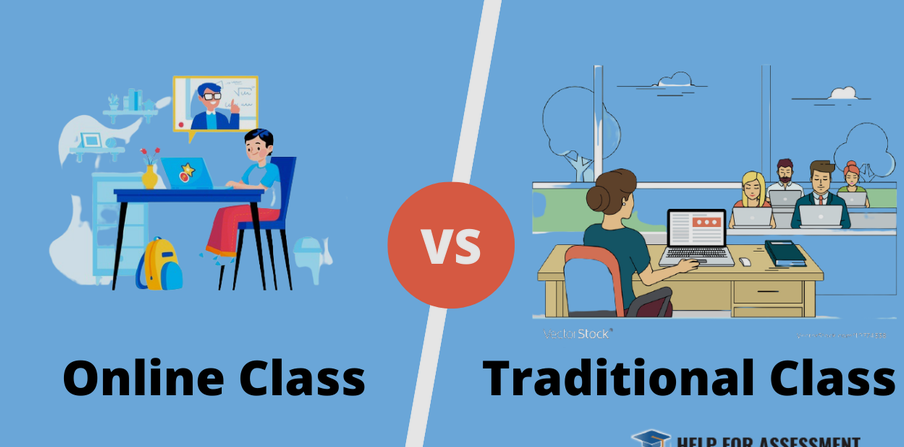
Education has changed dramatically with the growth of the internet, digital platforms, and modern technology. Students no longer have to depend entirely on schools, colleges, universities, or training centers to gain knowledge. Today, learners can take online courses from home, attend virtual classes, watch recorded lectures, complete digital assignments, and develop professional skills without being physically present in a classroom.
At the same time, traditional classroom education remains one of the most established and widely used learning methods. Students attend classes at fixed times, interact directly with teachers, participate in group activities, and learn alongside their classmates. This environment provides structure, personal interaction, and immediate opportunities to ask questions.
The growing popularity of online education has created an important question: Are online courses better than traditional classes, or is face-to-face education still the better option?
The answer is not the same for everyone. Research comparing online and traditional education generally suggests that neither method is universally superior. The effectiveness of a learning method depends on factors such as the student’s goals, learning style, subject, schedule, motivation, teacher support, course quality, and access to technology.
This article compares online courses and traditional classes in detail to help students, working professionals, and lifelong learners decide which approach may be better for their needs.
What Are Online Courses?
Online courses are educational programs delivered through the internet. Students can access lessons using computers, tablets, or smartphones. Depending on the course, learning may involve recorded videos, live virtual classes, quizzes, assignments, discussion forums, downloadable resources, projects, and digital assessments.
Some online courses are completely self-paced. Students can decide when and where to study. Others follow a fixed schedule with live lectures and deadlines.
Online learning has become particularly attractive to working professionals and people who cannot easily attend a physical institution. It allows learners to study from different locations and often provides greater control over their schedules.
A major advantage is that recorded content can often be reviewed multiple times. If a student does not understand a concept during the first viewing, they may pause, rewind, and revisit the lesson later.
What Are Traditional Classes?
Traditional classes take place in a physical location such as a school, college, university, training center, classroom, laboratory, or workshop.
Students generally follow a predetermined timetable and attend lessons in person. Teachers provide instruction directly, while students participate in discussions, activities, practical exercises, presentations, and group projects.
One of the biggest advantages of traditional education is direct human interaction. Students can ask questions immediately, communicate with instructors face-to-face, and work with classmates in the same physical environment.
Traditional classes also create a structured routine. Regular attendance, scheduled lessons, deadlines, and classroom expectations can make it easier for some learners to remain disciplined.
Online Courses vs Traditional Classes: Quick Comparison
| Factor | Online Courses | Traditional Classes |
|---|---|---|
| Flexibility | Very high | Usually limited |
| Location | Can study remotely | Requires physical attendance |
| Schedule | Flexible or partly flexible | Usually fixed |
| Teacher interaction | Digital or virtual | Face-to-face |
| Social interaction | Mostly online | Direct and frequent |
| Learning pace | Often self-paced | Usually instructor-paced |
| Travel | Little or none | Often required |
| Technology | Essential | Less dependent on technology |
| Practical training | Depends on course | Usually stronger |
| Accountability | Requires self-discipline | Built into the environment |
| Recorded lessons | Often available | Not always available |
| Networking | Digital networking | Face-to-face networking |
| Cost | Can be lower, but varies | May include travel and campus expenses |
The table shows that both methods have different strengths. Online learning generally performs well in flexibility and accessibility, while traditional education offers advantages in direct interaction, structure, and practical learning.
Flexibility: Online Courses Have the Advantage
Flexibility is one of the strongest advantages of online learning.
A traditional class normally requires students to attend at a particular location at a specific time. This can be difficult for people who have jobs, family responsibilities, transportation problems, or other commitments.
Online courses can provide much more freedom. Students may be able to study early in the morning, during lunch breaks, in the evening, or on weekends. Recorded lessons can be particularly useful because learners can choose when to watch them.
This flexibility makes online education attractive to working professionals who want to improve their skills without leaving their jobs.
For example, someone working a full-time job may not be able to attend a three-hour classroom course every afternoon. An online course with recorded lessons could allow that person to study after work.
However, flexibility also requires responsibility. A student who constantly postpones lessons may fall behind.
Structure and Discipline: Traditional Classes Often Win
Traditional classrooms provide a built-in learning structure.
Students usually know when classes begin, when assignments are due, and when examinations will take place. Teachers and classmates create a sense of accountability.
This can be especially useful for students who struggle with time management or self-discipline.
Online courses provide freedom, but too much freedom can sometimes become a problem. Without a fixed schedule, students may postpone lessons or become distracted by social media, entertainment, household activities, or other responsibilities.
Therefore, online learning is most effective for students who can create and follow their own study routines.
Teacher Interaction and Feedback
Teacher interaction is another major difference between the two learning methods.
In a traditional classroom, students can normally raise their hands and ask questions immediately. Teachers can observe students’ reactions and recognize when someone appears confused.
Face-to-face communication also includes nonverbal signals such as facial expressions, gestures, and body language.
Online courses can provide teacher interaction through live video sessions, email, discussion boards, chat, feedback systems, and virtual office hours. A well-designed online course can therefore offer meaningful interaction.
However, the quality of online interaction depends heavily on course design and instructor availability. A course consisting only of recorded videos may provide much less personal support than a live classroom.
Research has found that traditional classrooms can provide advantages in immediate feedback and interpersonal communication, while well-designed online learning can provide flexibility and personalized pacing.
Learning at Your Own Pace
One of the most useful features of online courses is the ability to control the learning pace.
Some students understand new concepts quickly, while others need additional explanations and repeated practice. Recorded online lessons allow students to pause and replay difficult sections.
A learner can spend extra time on a complicated topic without worrying about holding back an entire classroom.
Traditional classes generally follow the teacher’s pace. If the class has already moved to the next topic, students may need to review the previous lesson independently.
For self-directed learners, online education can therefore be extremely effective.
Social Interaction and Communication
Traditional classes have a clear advantage when it comes to natural social interaction.
Students meet their classmates every day, participate in group activities, discuss ideas, make friends, and develop communication skills.
These interactions can be particularly important for younger students and for subjects that require teamwork.
Online courses can also support social learning through video meetings, online communities, discussion boards, group projects, and messaging platforms. However, digital communication may not always create the same level of connection as face-to-face interaction.
Students who enjoy learning through conversation and teamwork may therefore prefer traditional classrooms.
Cost of Learning
Cost is another important consideration.
Online courses can sometimes be more affordable because students may not need to pay for transportation, accommodation, campus facilities, printed materials, or other physical expenses.
However, online learning is not automatically cheaper. Students may need a reliable computer, smartphone, internet connection, software subscriptions, and a suitable study environment.
Traditional education can involve tuition fees as well as transportation, accommodation, books, uniforms, meals, and other expenses.
The total cost therefore depends on the institution and course rather than simply whether the learning method is online or offline.
Before enrolling, students should compare the complete cost of both options.
Accessibility and Location
Online courses have transformed access to education.
A learner living far from a university or professional training center can potentially access educational content without relocating. This is particularly useful for people living in areas where certain courses or qualified instructors are not locally available.
Traditional classes require students to be physically present. This can make education more difficult for people who live far from institutions or have mobility, transportation, or scheduling challenges.
Online learning therefore provides a major advantage for geographical accessibility.
Practical Learning and Hands-On Skills
Traditional classrooms are generally stronger for courses that require physical practice.
Subjects such as laboratory science, medicine, nursing, mechanical training, construction, certain technical trades, and other practical disciplines may require equipment, supervised practice, demonstrations, or physical interaction.
Online education can teach theoretical concepts effectively and can use simulations, demonstrations, and virtual exercises. However, digital learning cannot always replace real-world hands-on experience.
For example, watching a video about operating laboratory equipment is different from physically using that equipment under an instructor’s supervision.
This is one reason some professional programs benefit from classroom or blended learning. Research involving medical education has similarly highlighted the importance of face-to-face learning for practical and clinical skills.
Technology Requirements
Online education depends heavily on technology.
Students need an appropriate device, reliable internet access, and basic digital skills. Technical problems can interrupt classes, prevent access to materials, or make communication difficult.
Traditional classrooms generally have fewer technology requirements for students. Although modern classrooms increasingly use computers, projectors, digital boards, and educational software, students can often participate without having their own high-performance device.
For learners with limited internet access, traditional education may therefore be more convenient.
Motivation and Self-Discipline
Motivation is one of the most important factors in online education.
Online students often have greater freedom, but they also have greater responsibility. They need to manage their time, complete assignments, attend virtual sessions, and avoid distractions.
Students who are highly motivated and organized may enjoy this independence.
On the other hand, students who need regular supervision may perform better in traditional classrooms. Teachers, classmates, attendance requirements, and fixed schedules can create external motivation.
Online learning therefore rewards self-discipline, while traditional learning provides more external structure.
Which Method Is Better for Working Professionals?
For many working professionals, online courses are the more convenient choice.
A professional can learn new skills without leaving a job or traveling to an educational institution. Courses in areas such as digital marketing, business management, programming, graphic design, communication, project management, data analysis, and many other fields can often be studied online.
The ability to watch recorded lessons is particularly valuable for professionals with unpredictable schedules.
However, traditional evening or weekend classes can still be useful when networking, live interaction, or practical training is important.
Which Method Is Better for School and College Students?
The answer depends on the student’s age, learning habits, academic goals, and subject.
Younger students may benefit significantly from the routine and supervision of a traditional classroom. Teachers can monitor their progress, classmates provide social interaction, and schools create a structured daily environment.
Older students may be more capable of managing online education independently.
For college and university students, both options can be effective. The choice should depend on the program, instructor quality, course requirements, and personal circumstances.
Which Method Is Better for Career Development?
Online learning has become particularly valuable for professional development.
Many workers want to acquire new skills without spending several years completing a traditional degree. Short online courses can provide focused training in specific areas.
For example, a marketing professional may take a course in search engine optimization, while a business owner may study customer relationship management software or digital advertising.
Traditional education can still be valuable when a career requires a formal qualification, professional certification, laboratory experience, or supervised training.
Therefore, career-focused learners should consider not only the delivery method but also whether the qualification or credential is recognized and relevant to their career goals.
Online Courses Can Provide Greater Learning Variety
The internet gives learners access to a wide range of educational formats.
Online courses can include:
- Video lectures
- Interactive quizzes
- Downloadable notes
- Digital assignments
- Discussion forums
- Virtual workshops
- Simulations
- Recorded demonstrations
- Online projects
- Peer collaboration
This variety can make learning more engaging when the course is well designed.
Traditional classes can also use multimedia and interactive teaching, but the range of resources may depend on the institution and classroom facilities.
Traditional Classes Can Build Stronger Networks
Networking is another area where traditional learning can be valuable.
Students in physical classrooms interact directly with teachers, classmates, guest speakers, and other professionals. These relationships can sometimes lead to internships, career opportunities, collaborations, or long-term professional connections.
Online students can also build professional networks through virtual communities, social platforms, group projects, and live events.
However, people who naturally build relationships through face-to-face communication may find traditional environments more comfortable.
The Importance of Course Quality
One of the biggest mistakes learners make is assuming that every online course is effective simply because it is digital.
The quality of the course matters more than the format.
A poorly designed online course with outdated information, unclear lessons, limited feedback, and weak assessments may be less effective than a high-quality classroom course.
Similarly, a traditional class with poor teaching, overcrowding, outdated materials, and limited student interaction may not provide a good learning experience.
When choosing between online and traditional education, students should evaluate the instructor, curriculum, learning objectives, assessments, support services, practical components, and reputation of the institution.
Blended Learning: The Best of Both Worlds?
Blended learning combines online education with traditional classroom instruction.
For example, students might watch lectures online before attending a classroom session where they solve problems, discuss concepts, perform practical activities, or work on projects.
This approach can combine the flexibility of online learning with the interaction and structure of traditional education.
Research comparing different learning environments has suggested that blended approaches can be useful because they combine digital flexibility with face-to-face engagement.
However, blended learning is not automatically better. Its success depends on how effectively the online and classroom components work together.
How to Choose the Right Learning Method
Before choosing an online course or traditional class, ask yourself several questions.
1. What Is Your Learning Goal?
If you want to learn a specific skill quickly, an online course may be sufficient.
If you need a formal academic qualification or professional training requiring practical experience, traditional or blended education may be more appropriate.
2. How Much Flexibility Do You Need?
If your schedule changes frequently, online education may be the better option.
If you prefer a fixed routine and can attend classes regularly, traditional learning may work well.
3. Are You Self-Disciplined?
If you can create your own schedule and complete assignments without constant supervision, online learning may suit you.
If you need external accountability, a traditional classroom may provide better support.
4. Does the Subject Require Practical Training?
For theoretical subjects, online learning can be highly convenient.
For subjects requiring physical equipment, laboratories, clinical work, or hands-on practice, classroom-based learning may be more appropriate.
5. How Important Is Social Interaction?
If you learn best through discussions, teamwork, and face-to-face communication, consider traditional classes or a blended program.
6. What Technology Do You Have?
Make sure you have the device, internet connection, software, and study environment required for online learning.
Advantages of Online Courses
The major advantages of online learning include:
- Flexible schedules
- Remote access
- Self-paced learning
- Convenient recorded lessons
- Wide variety of subjects
- Reduced commuting
- Access to instructors from different locations
- Convenient learning for working professionals
- Easy revision of digital materials
- Opportunities to learn alongside students from different regions
These benefits make online education particularly attractive to independent and busy learners.
Disadvantages of Online Courses
Online learning also has limitations:
- Requires self-discipline
- Can create distractions
- May reduce face-to-face interaction
- Depends on reliable technology
- Can feel isolating
- Feedback may not always be immediate
- Practical training can be limited
- Some courses offer poor instructor support
- Students may struggle with motivation
The flexibility that makes online learning attractive can become a disadvantage if students cannot manage their time effectively.
Advantages of Traditional Classes
Traditional classrooms offer several important benefits:
- Direct teacher interaction
- Immediate questions and answers
- Structured schedules
- Stronger social interaction
- Group activities
- Face-to-face networking
- Better supervision
- Practical training opportunities
- Physical access to laboratories and equipment
- A dedicated environment for studying
For students who need routine and personal guidance, these advantages can be significant.
Disadvantages of Traditional Classes
Traditional education also has disadvantages:
- Fixed schedules
- Location restrictions
- Travel requirements
- Potential transportation costs
- Less flexibility
- Limited ability to replay lessons
- Classroom pace may not suit every learner
- Physical attendance can be difficult for busy students
A student who works full time or lives far away from an institution may find these limitations challenging.
Final Verdict: Which Learning Method Is Better?
So, online courses vs traditional classes—which learning method is better?
There is no universal winner.
Online courses are generally better for learners who value flexibility, remote access, self-paced study, and convenience. They are particularly useful for working professionals, independent learners, people with busy schedules, and students who have access to reliable technology.
Traditional classes are generally better for learners who prefer structure, direct teacher interaction, social learning, practical activities, and face-to-face communication.
The subject also matters. A learner studying a theoretical topic may successfully complete an online course, while someone learning a practical skill may benefit more from hands-on classroom instruction.
The most important point is that learning quality depends on more than the delivery format. Course design, teacher quality, student motivation, feedback, interaction, assessment, resources, and learning objectives all influence educational outcomes. Comparative research has found that different studies can favor online learning, face-to-face learning, or show little difference, depending on the circumstances and design of the learning experience.
For many learners, the ideal solution may be a combination of both methods. Online lessons can provide flexibility and convenient revision, while classroom sessions can provide discussion, supervision, practical experience, and networking.
Ultimately, the best learning method is the one that fits your goals, schedule, learning style, budget, subject, and ability to stay motivated.
Instead of asking whether online courses or traditional classes are universally better, ask a more useful question: Which learning environment gives me the best opportunity to understand the material, practice my skills, stay consistent, and achieve my long-term goals?