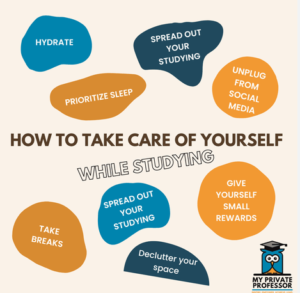
Creating a daily study schedule sounds simple, but making one that you can actually follow is a different challenge. Many students create ambitious timetables filled with long study sessions, difficult subjects, and unrealistic goals. They may follow the plan for a few days, but eventually become tired, distracted, or overwhelmed and abandon it.
An effective study schedule should not make your life more stressful. Instead, it should give you a clear idea of what to study, when to study, how long to study, and when to take breaks. The best schedule is not necessarily the one with the most study hours. It is the one that fits your real routine and helps you study consistently.
A good schedule also combines focused study sessions, revision, practice, breaks, sleep, and personal time. Planning study sessions around your actual commitments and energy levels can make the routine much easier to maintain.
This guide explains how to create a daily study schedule that is realistic, flexible, productive, and sustainable.
Why a Daily Study Schedule Matters
Without a schedule, students often study according to mood or urgency. They may spend several hours on one subject because an exam is approaching while completely ignoring other important subjects. This can lead to last-minute cramming and unnecessary stress.
A daily study schedule provides structure. Instead of asking yourself, “What should I study today?” you already have a plan.
A well-designed schedule can help you:
- Organize your academic responsibilities
- Reduce procrastination
- Divide large subjects into smaller tasks
- Give enough attention to difficult topics
- Create regular revision sessions
- Avoid last-minute cramming
- Maintain a healthier balance between study and personal life
- Track your progress
- Build consistent study habits
The goal is not to study every available minute. The goal is to use your available time intelligently.
1. Start by Understanding Your Current Routine
Before creating a schedule, look at how your day actually works.
Write down your regular commitments, including school or college, work, tuition, commuting, meals, family responsibilities, exercise, religious activities, entertainment, and sleep.
For example, if you attend college from 8:00 a.m. to 2:00 p.m., you should not create a timetable that assumes you are available for studying throughout the morning.
Your schedule needs to reflect your real life rather than an ideal version of your life.
For one or two days, observe where your time goes. You may discover that you have more free time than you expected—or that social media, television, gaming, and unnecessary phone use are consuming hours.
Once you understand your routine, identify the genuinely available study periods.
2. Decide What You Need to Study
The next step is to make a complete list of your academic responsibilities.
Do not simply write:
“Study Biology.”
That is too vague.
Instead, break the subject into specific tasks:
- Read Chapter 4
- Review cell division
- Create flashcards
- Answer 20 practice questions
- Review incorrect answers
- Revise previous notes
Specific tasks make study sessions easier to start and complete.
Create a list of your subjects and divide each subject into chapters, topics, assignments, projects, and revision requirements.
This gives you a complete picture of your workload.
3. Identify Your Most Important Subjects
Not every subject requires the same amount of time.
You may find mathematics difficult while English is relatively easy. Another student may have the opposite experience.
Give more study time to subjects that are:
- Difficult for you
- Important for your final grade
- Coming up in an examination
- Based on skills that require practice
- Connected to other topics you need to understand
You can divide your subjects into three categories:
High Priority
These are difficult, urgent, or important subjects that require frequent attention.
Medium Priority
These subjects need regular study but may not require as much time.
Low Priority
These are subjects or topics you already understand well but still need to review occasionally.
This approach prevents you from spending equal amounts of time on everything when your actual needs are different.
4. Set Clear Daily Study Goals
A schedule should contain goals, not just hours.
For example, instead of writing:
4:00–5:00 p.m. — Mathematics
write:
4:00–5:00 p.m. — Complete 15 algebra problems and review mistakes.
The second goal is measurable.
Good daily goals answer three questions:
- What will I study?
- What exactly will I complete?
- When will I finish it?
You can also use realistic targets such as:
- Read 15 textbook pages
- Complete 25 practice questions
- Memorize 20 vocabulary words
- Write one essay outline
- Review yesterday’s lecture
- Complete one section of an assignment
Specific goals make it easier to determine whether your study session was successful.
5. Find Your Best Study Hours
Everyone has periods when concentration feels easier.
Some students are highly focused in the morning. Others perform better in the afternoon or evening.
Pay attention to your energy levels.
If you are most alert in the morning, use that time for difficult subjects such as mathematics, science, programming, or analytical reading.
If your concentration is stronger in the evening, schedule demanding tasks during that period.
Less demanding activities—such as organizing notes, reviewing flashcards, reading summaries, or preparing materials—can be placed during lower-energy periods.
Your schedule should work with your concentration patterns rather than against them.
6. Use Focused Study Blocks
Instead of planning one enormous study session, divide your day into focused blocks.
For example:
4:00–4:50 — Mathematics
4:50–5:05 — Break
5:05–5:55 — Biology
5:55–6:15 — Break
6:15–7:00 — English
The exact duration can vary according to your age, subject, concentration level, and personal preferences.
Some students prefer 25-minute sessions followed by short breaks. Others work better for 45–60 minutes before taking a break.
The important principle is to protect the study period from distractions and focus on one meaningful task at a time.
7. Avoid Overloading Your Schedule
One of the biggest reasons study schedules fail is overplanning.
A student may create a timetable that looks like this:
- 5:00–6:00 Mathematics
- 6:00–7:00 Physics
- 7:00–8:00 Chemistry
- 8:00–9:00 English
- 9:00–10:00 Biology
- 10:00–11:00 Revision
On paper, this looks productive. In reality, the student may become exhausted after the first few sessions.
A better schedule includes realistic expectations.
If you have three hours available, do not automatically plan three hours of intense concentration. Include breaks, transitions, meals, unexpected responsibilities, and time to recover.
A flexible schedule is usually more sustainable than a perfect-looking schedule.
8. Include Breaks in Your Schedule
Breaks are not wasted time.
Continuous studying can lead to mental fatigue, reduced attention, and lower-quality work. Planned breaks give you an opportunity to relax and return to your studies with renewed attention.
A break can include:
- Walking around
- Drinking water
- Having a healthy snack
- Stretching
- Resting your eyes
- Talking briefly with family
- Getting some fresh air
Try to avoid turning a five-minute break into a one-hour social media session.
If your phone is your biggest distraction, keep it away from your study area during focused sessions.
9. Schedule Revision Every Day
Studying new information is only one part of learning.
Revision should be included in your daily schedule.
For example, you might spend:
- 40 minutes learning new material
- 15 minutes reviewing yesterday’s material
- 10 minutes testing yourself on older topics
Regularly revisiting information helps prevent everything from being left until the night before an exam. Spacing learning across multiple sessions is generally more useful for long-term retention than relying entirely on one large cramming session.
A simple revision pattern could be:
Today: Learn the topic
Tomorrow: Review it briefly
Later in the week: Test yourself
Before the exam: Complete a larger review
The exact intervals can vary, but the main idea is to revisit important information regularly.
10. Combine Different Study Methods
Your schedule should not consist entirely of reading textbooks.
Different activities can make your study sessions more productive.
For example:
Active Recall
Close your book and try to explain what you remember.
Practice Questions
Solve problems without immediately checking the answer.
Flashcards
Use flashcards for vocabulary, definitions, formulas, dates, and key concepts.
Summarization
After studying a topic, explain it in your own words.
Teaching
Pretend you are teaching the topic to another student.
Past Papers
Practice questions that resemble the format of your actual examination.
A strong schedule gives you time for both learning and testing.
11. Plan Your Hardest Subject First
If you have several subjects to study, consider putting the most demanding subject during your strongest concentration period.
For example:
8:00–9:00 a.m. — Mathematics
9:00–9:15 a.m. — Break
9:15–10:00 a.m. — Physics
10:00–10:15 a.m. — Break
10:15–11:00 a.m. — English
The difficult work is completed while your mind is fresh.
Later, when your energy decreases, you can move toward lighter tasks such as reviewing notes or organizing assignments.
12. Keep Your Daily Schedule Simple
You do not need a complicated productivity system.
A notebook, wall calendar, spreadsheet, or digital calendar can be enough.
Your daily schedule should clearly show:
- Start time
- End time
- Subject
- Specific task
- Breaks
- Revision
- Important deadlines
Avoid spending more time designing your schedule than actually studying.
A simple schedule that you follow is much more valuable than a beautiful schedule that you ignore.
13. Create a Sample Daily Study Schedule
Here is an example for a student who attends classes during the day:
Morning
6:30 a.m. — Wake up
6:45–7:15 a.m. — Quick revision
7:15–8:00 a.m. — Breakfast and preparation
8:00 a.m.–2:00 p.m. — School or college
Afternoon
2:00–3:00 p.m. — Lunch and rest
3:00–3:45 p.m. — Mathematics practice
3:45–4:00 p.m. — Break
4:00–4:45 p.m. — Science study
4:45–5:15 p.m. — Break or exercise
Evening
5:15–6:00 p.m. — English or another lighter subject
6:00–7:00 p.m. — Personal or family time
7:00–7:45 p.m. — Homework and assignments
7:45–8:15 p.m. — Dinner
Night
8:15–9:00 p.m. — Revision and practice questions
9:00–9:15 p.m. — Prepare tomorrow’s study plan
After 9:15 p.m. — Relax and prepare for sleep
This is only an example. Your schedule should be adjusted according to your school, work, family responsibilities, energy levels, and academic goals.
14. Protect Your Sleep
A study schedule should never treat sleep as optional.
Students sometimes sacrifice sleep because they believe additional study hours will automatically improve their performance. However, being extremely tired can make concentration and learning more difficult.
Instead of studying until very late every night, try to create a consistent routine that allows sufficient time for sleep.
If you regularly feel exhausted during study sessions, examine your overall routine. The problem may not be a lack of discipline; you may simply be trying to study at a time when your brain and body need recovery.
15. Control Digital Distractions
Your phone can easily destroy a carefully planned study session.
A student may intend to check one notification and then spend 30 minutes scrolling through social media.
Before starting a study block:
- Put your phone on silent
- Disable unnecessary notifications
- Keep distracting websites closed
- Use website blockers if necessary
- Keep your phone away from your desk
- Use only the apps required for studying
If you need your phone for educational purposes, decide in advance what you will use it for.
For example:
“I will use my phone only to watch the 20-minute lecture and then return it to my desk drawer.”
Clear rules reduce impulsive distractions.
16. Leave Some Flexible Time
A schedule without flexibility can collapse after one unexpected event.
You might have:
- A family responsibility
- An unexpected assignment
- A delayed class
- A doctor’s appointment
- A technical problem
- An unusually tiring day
Instead of filling every available minute, leave some empty or flexible time.
You can use this time to catch up on unfinished work.
If everything goes according to plan, the buffer becomes free time.
17. Use a “Minimum Study” Rule
Some days will not go as planned.
You may feel tired, busy, or unmotivated.
Instead of completely abandoning your routine, set a minimum study goal.
For example:
“Even on a difficult day, I will study for at least 20 minutes.”
The purpose is not to complete a huge amount of work. It is to maintain consistency.
Once you begin, you may naturally continue longer. But even a short session can help prevent the habit from disappearing completely.
18. Review Your Schedule Every Week
Your first schedule will probably not be perfect.
That is normal.
At the end of each week, ask yourself:
- Which study sessions did I complete?
- Which sessions did I repeatedly skip?
- Which subjects need more time?
- Did I underestimate how long certain tasks take?
- Was I studying difficult subjects at the wrong time?
- Were my breaks long enough?
- Did I get enough rest?
- What distracted me most?
- What should I change next week?
Weekly review is important because your schedule should evolve as your workload and priorities change.
19. Track Progress Instead of Chasing Perfection
Do not expect yourself to follow your schedule perfectly every day.
The goal is consistency, not perfection.
If you planned six study sessions and completed five, that is progress.
If you missed Tuesday, do not decide that the entire week is ruined. Simply return to the schedule at the next available opportunity.
A missed session should be treated as a temporary interruption rather than a reason to quit.
20. Common Study Schedule Mistakes
Making an Unrealistic Timetable
Planning 10 hours of intense study every day is usually difficult to maintain.
Solution: Start with a realistic number of focused sessions and gradually increase your workload if necessary.
Studying Without Clear Goals
“Study chemistry” does not tell you what to accomplish.
Solution: Specify the chapter, concept, questions, or assignment.
Ignoring Weak Subjects
Students sometimes study their favorite subjects because they are more comfortable.
Solution: Give additional attention to subjects that need improvement.
No Breaks
Studying continuously can reduce concentration.
Solution: Schedule regular short breaks.
No Revision
Learning something once does not mean you will remember it permanently.
Solution: Include daily and weekly review sessions.
Copying Someone Else’s Routine
A schedule that works for another student may not fit your lifestyle.
Solution: Build around your own classes, commitments, energy levels, and goals.
Giving Up After One Bad Day
One missed day does not mean your schedule has failed.
Solution: Restart immediately instead of waiting for the next week or month.
21. A Simple Formula for Building Your Schedule
You can use this simple formula:
Fixed commitments + priority subjects + focused study blocks + revision + breaks + buffer time + sleep = sustainable study schedule
Start by blocking out non-negotiable activities.
Then identify your genuinely available time.
Next, place difficult subjects during your strongest concentration periods.
After that, add easier subjects, revision, practice questions, and assignments.
Finally, add breaks and flexible time.
This creates a schedule based on your real circumstances rather than wishful thinking.
22. How to Make Your Schedule Easier to Follow
A schedule becomes much more effective when you connect it to simple habits.
Try studying in the same location every day. Over time, that environment can become associated with focused work.
Prepare your books and materials before the session starts.
Keep a written list of your daily priorities.
Start your study session at the same approximate time whenever possible.
Use alarms or calendar reminders to signal when it is time to begin.
Most importantly, make the first step easy.
Instead of telling yourself, “I have to study for three hours,” tell yourself:
“I only need to sit down and complete the first 25 minutes.”
Starting is often easier when the task feels manageable.
Conclusion
Creating a daily study schedule that actually works is not about filling every hour with academic work. It is about creating a realistic system that helps you study consistently while still allowing time for sleep, meals, family, relaxation, and other responsibilities.
Start by understanding your actual routine. List everything you need to study, prioritize difficult and urgent subjects, identify your best concentration periods, and divide your available time into focused study blocks. Include regular breaks, revision, practice, and some flexible time for unexpected events.
Most importantly, remember that your schedule does not need to be perfect. It needs to be practical enough to follow.
A successful study routine is built gradually. Review your schedule every week, identify what is working, fix what is not, and continue improving. With a realistic plan and consistent effort, studying can become a regular part of your daily routine rather than something you constantly postpone until exams are near.